

Salon Natasha Wedding of Vu Dan Tan and Natasha Kraevskaia
Seeing inside an artist’s studio feels strangely intimate. Looking at the space they have created or chosen to make their art in seems to tell us something about the person. Opening up their notepads – seeing doodles, cuttings, handwritten notes in looping letters or cramped script – is like peering inside their minds and understanding a little of the artist.
There is a wealth of such material on western artists. There are photos of every artist you can possibly think of at work in their studio, photos of their lives, their lovers. Their letters and diaries have often been made publically available. In Asia there is very little of this kind of art history, particularly in the realm of what is considered contemporary art, most of which was made outside of the mainstream and sanctioned sphere.
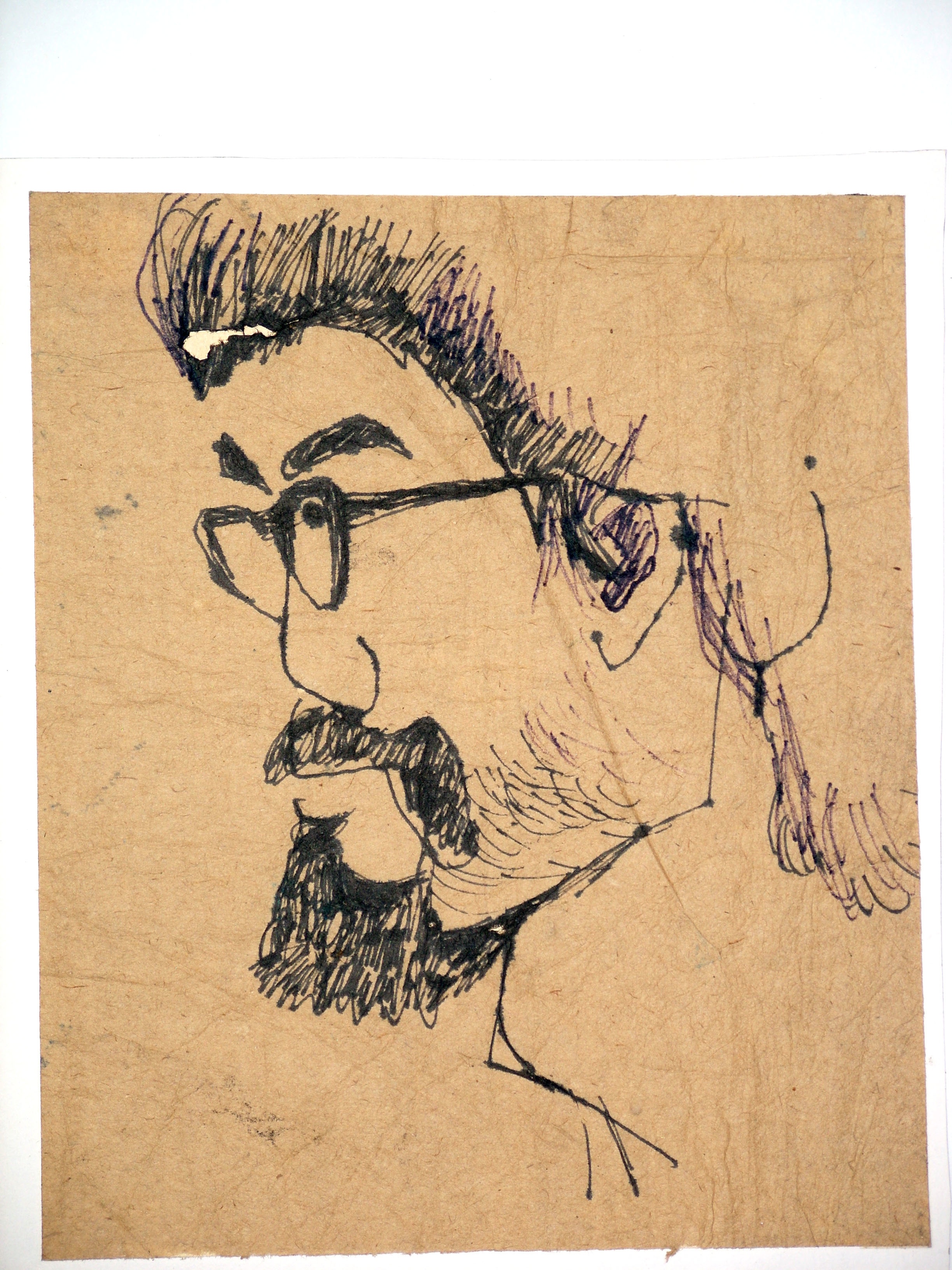
Salon Natasha Sketch of Vu Dan Tan by Bui Xuan Phai
The Asia Art Archive (AAA) aims to address this shortfall. They have approximately 45,000 records, some of which have been digitised and are accessible online, including a number of specialist archive collections.
One collection focuses on contemporary Chinese artists from 1980 until 1990, including material on Zhang Peili, best known for his video art, plus leading surrealist painters Zhang Xiaogang and Mao Xuhui. There are archives of material from pioneering Indian art critic Geeta Kapur and Indian contemporary artist Vivan Sundaram. And for Vietnam there are two collections, one with material from Salon Natasha in Hanoi and the other covering Blue Space Contemporary Arts Centre in Ho Chi Minh City. Together these collections help begin build up a history of art in the region.
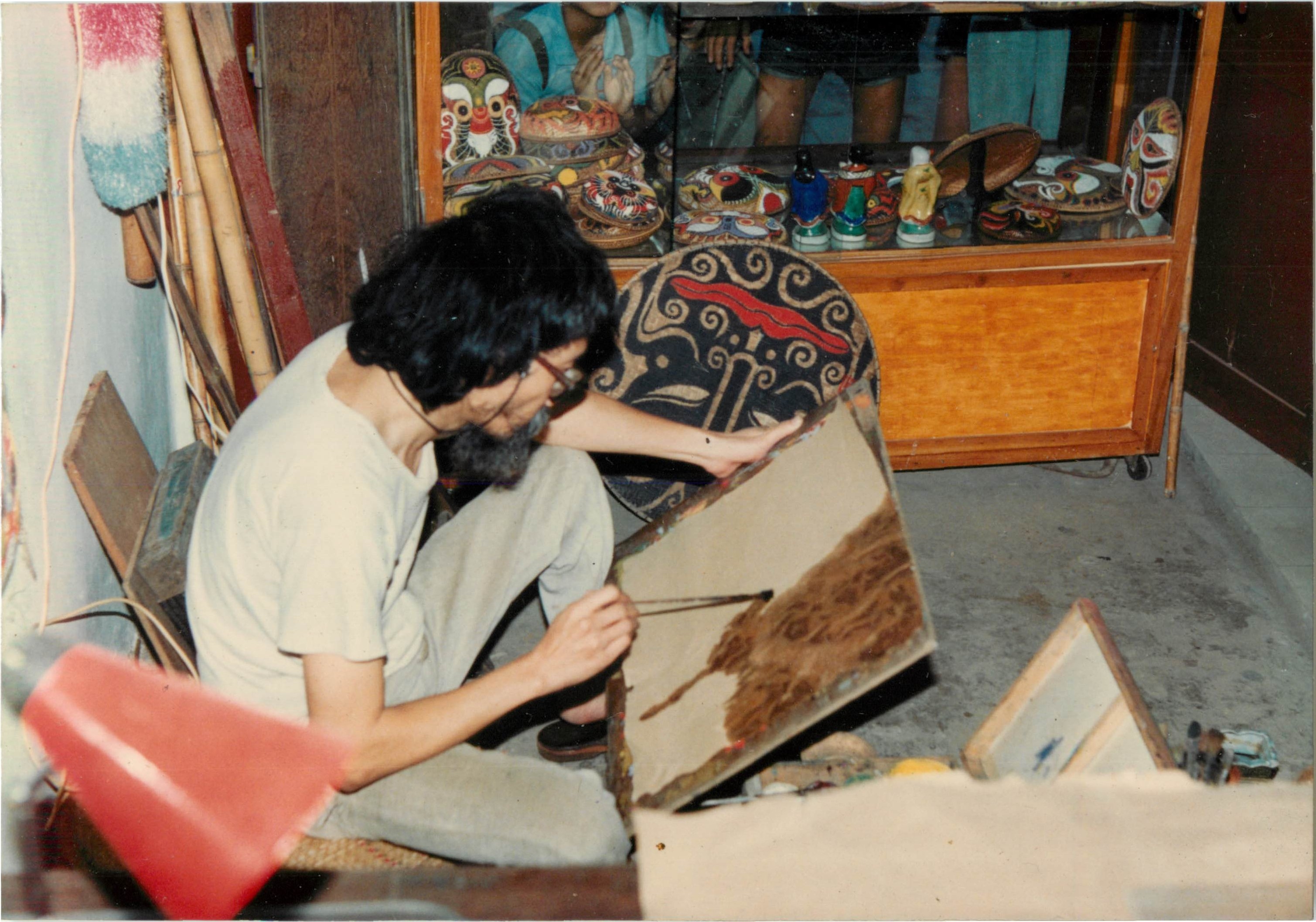
Salon Natasha Vu Dan Tan early 90s
Within Vietnam Blue Space and Salon Natasha were the only two spaces which had any degree of artistic freedom in the early 1990s. Blue Space was a gallery housed within the fine art museum but independent thanks to its funding from the Ford Foundation. Salon Natasha, being within the private home of artist Vu Dan Tan and his wife Natasha Kraevskaia, achieved even greater independence. Salon Natasha fulfilled many purposes. It was open to the public on a daily basis for workshops and as a gallery space for numerous exhibitions, it was Vu Dan Tan’s studio, a meeting place for artists and their friends, and a space where experimental art was able to be made and experienced.
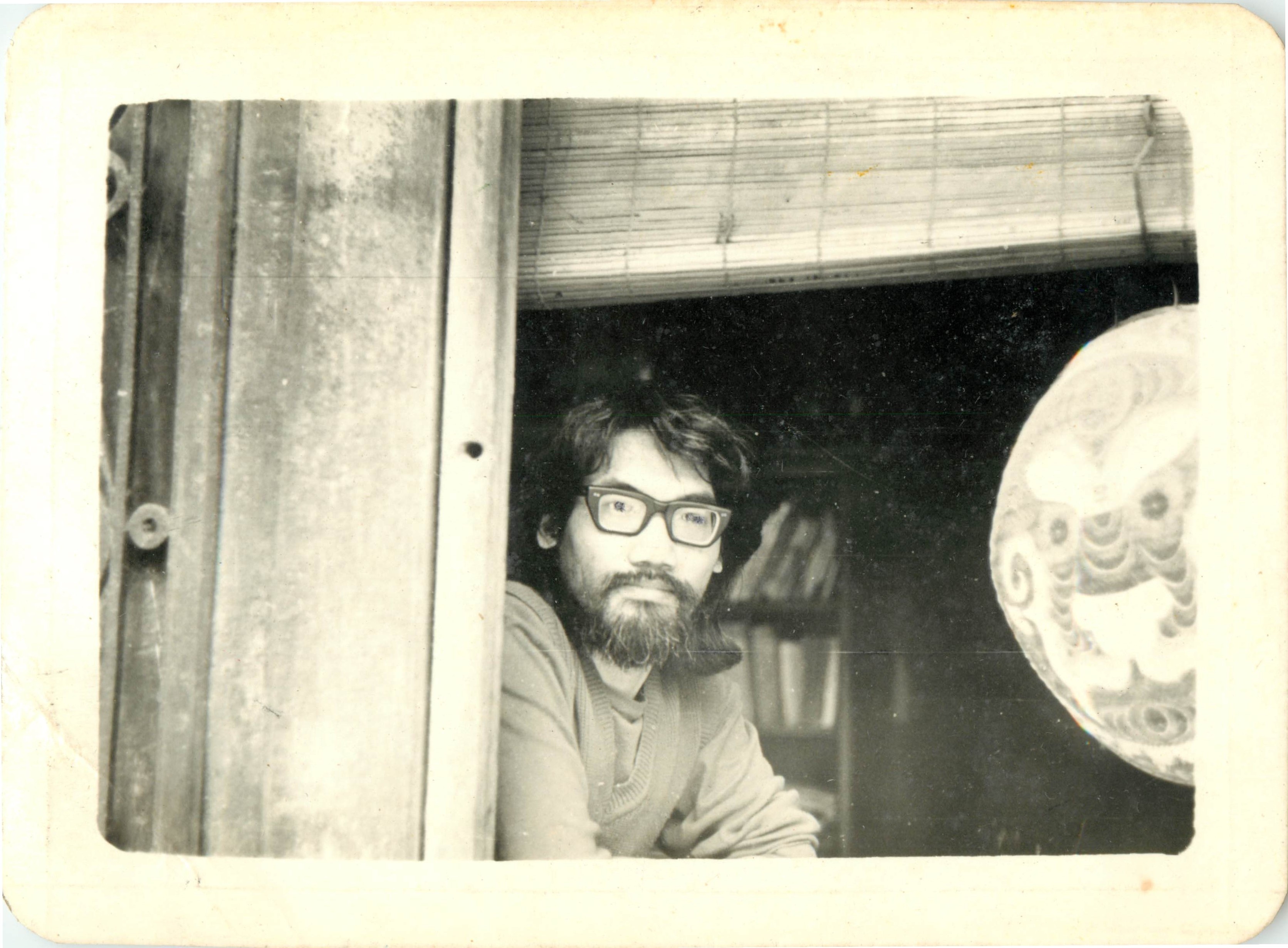
Salon Natasha Vu Dan Tan early 80s
The Salon Natasha Archive, with its intimate home snapshots of life, family and friends and drawings, flyers and shop fronts is a fascinating glimpse into this important part of Vietnamese art history.
As AAA say on their site, these collections are ‘just the beginning’. The material currently available online is just a fraction of the hundreds of thousands of photos, talks, workshops and cuttings which are constantly being added to.
●●
Words by Rose Arnold
Images reproduced courtesy of Salon Natasha. Not to be copied without permission.


