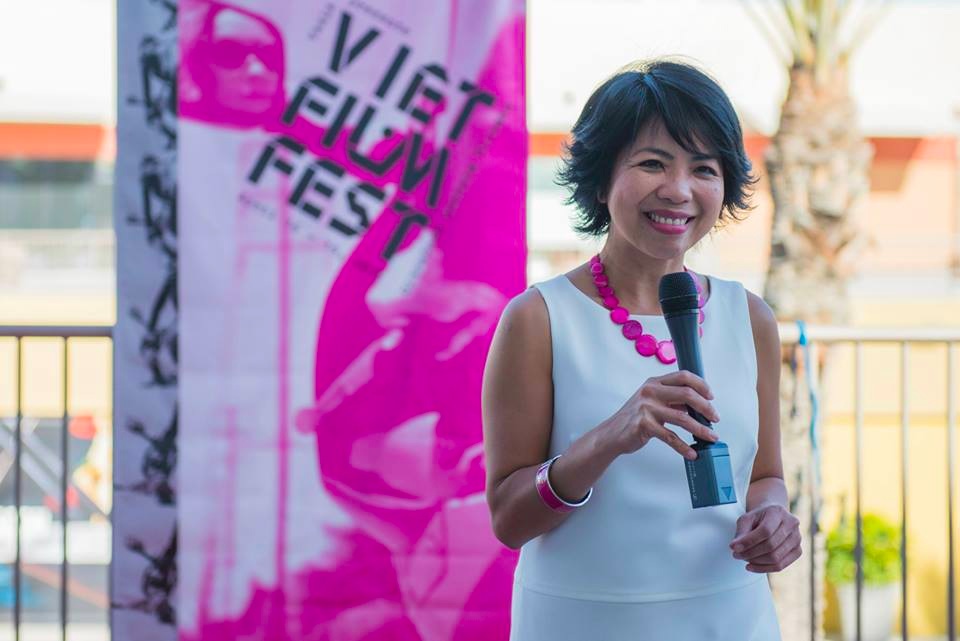
Ysa Le, executive director of VAALA and artistic co-director of VFF, talks about the importance of having a Vietnamese film festival outside of Vietnam and the past, present and future of Vietnamese filmmaking.
The 8th edition of VFF (Viet Film Fest) is this month in Orange County, California, home to the largest population of Vietnamese Americans in the United States. Over 25 feature and short films will be screened at the four-day event, one of the largest Vietnamese international film festivals in the world.
The organisers see it as an opportunity to showcase both Vietnamese talent in filmmaking and tell the multitude of stories that have gone amiss in the mainstream portrayal of Vietnam, it’s people and history. Ysa Le, who works as a pharmacist during the day, sees the potential of the creative industry to bring beautiful things to life. She joined the organising body of VAALA (Vietnamese American Arts & Letters Association) after her journalist father, who co-founded the event, passed away in 1999.
Interview by Sadie Christie ● Image VFF
There are famous films about the Vietnam War like Platoon and Apocalypse Now, but they aren’t about Vietnamese people, even though the war was in our country.
&: Why the name Vietnamese International Festival, for a film festival hosted in the US which also shows submissions from other countries?
Ysa Le: We always want to project our voice, tell our stories. Vietnam is a war-torn country and we are newcomers, we’ve only just got to the US. So we still have a lot of issues to talk about and establish our identities in our new life. We have a lot to tell, but the mainstream media doesn’t portray us that way.
Look how Hollywood portrays us – there are famous films about the Vietnam War like Platoon and Apocalypse Now, but they aren’t about Vietnamese people, even though the war was in our country.
There are a lot of lost stories. So we want to collect those stories from the diaspora, not just in the U.S, but also in France, Australia, Canada, and Germany. So that’s the mission, to celebrate the stories on the screen. We wanted to be unique in telling Vietnamese stories and we also want to support Vietnamese filmmakers of Vietnamese origin.
&: What are the criteria for submitting films to the VFF and how do you go about choosing the films that will show in the festival?
Ysa Le: If the director is of Vietnamese descent then he or she is qualified to submit their film. The film can be in any subject − doesn’t matter if it’s related to Vietnamese film or not. But if the filmmaker is not Vietnamese then we would like the work to say something about Vietnam or Vietnamese culture or people.
We also value the artistic talents of the filmmakers and we want to highlight that talent. We believe in the artists who contribute. No matter what they create, art contributes to the audience, to themselves, to society.
&: How has the film industry and your festival evolved since you first started?
Ysa Le: When we first started in 2003, we didn’t have enough features. We put out a call for entries but we didn’t know how to reach the communities in France or Australia. We depended on word of mouth and our relatives. The Vietnamese press helped too, but people were still not used to the idea of a film festival. We only had Trần Anh Hùng from France, Vertical Rays of the Sun, a beautiful film he shot in Hanoi, and Kim Nguyễn, from Canada, who came to show his first feature called The Marsh.
After that we saw an increasing number of films, because a few years later Vietnam opened the doors for private companies to make films in Vietnam − before that films were totally controlled by the government. A lot of filmmakers from America went back [to Vietnam] and shot films.
Films require people with skills and they have to learn. You will see that in the first generation of Vietnamese Americans you don’t have a lot of filmmakers because people who came here had to start their lives with empty hands. Now the second generations start branching out and want to explore. So we start seeing films in different countries exploring not just Vietnam but different subjects as well. The cool thing is that they still identify themselves as Vietnamese and they want to participate.
A healthy film industry has different genres, different types of audiences. It cannot be one voice.
&: Along with these new more open opportunities, do you find the themes within the films have changed as well?
Ysa Le: This year we have the biggest variety of genres we’ve ever had – experimental, horror, comedy, futuristic. We didn’t have horror movies before, now we have two ghost movies in the festival. This is not just because of filmmakers going to Vietnam from the US, but film festivals such as YxineFF and the filmmakers in Vietnam who are also making waves.
We have blockbusters like action movies or the comedy Để Hội Tính by Charlie Nguyễn, but we also see Nguyễn Hoàng Điệp’s film, Flapping in the Middle of Nowhere. They choose a different path, they have a smaller audience but it doesn’t mean that their films have less value.
I don’t want to distinguish too much between art house and commercial because it’s really a blurred line between them. A healthy film industry has different genres, different types of audiences. It cannot be one voice.
&: Do you have a memory of the first Vietnamese film you watched that you remember really loving?
Ysa Le: I was so young, but I think I remember when I first watched one film. It was more real to me because I was not in Vietnam and I saw a film made by Vietnamese director Trần Anh Hùng , The Scent of Green Papaya. And later I learned that he didn’t shoot it in Vietnam, he shot it in a studio in France and I was like wow, this is magic. I remember that feeling, a strange feeling because I must have watched it on TV at that time in the US and I was like wow, they speak Vietnamese in the film!
●●
The VFF is being held April 16 – 19, 2015 at UltraLuxe Anaheim Cinemas, California.
The festival is produced by VAALA (Vietnamese American Arts and Letter Association), a non-profit community-based organisation, founded in 1991 by journalists and artists from the first generation of Vietnamese Americans who emigrated to the U.S after 1975. Through a myriad of events including exhibitions, art festivals and contests, recitals, concerts, book signings, panel discussions on different artistic topics, and the Viet Film Fest, VAALA is a platform on which to reach and connect with Vietnamese art and culture.