Interview: Martin Nguyen talks about the very personal story depicted in his documentary Tomorrow You Will Leave
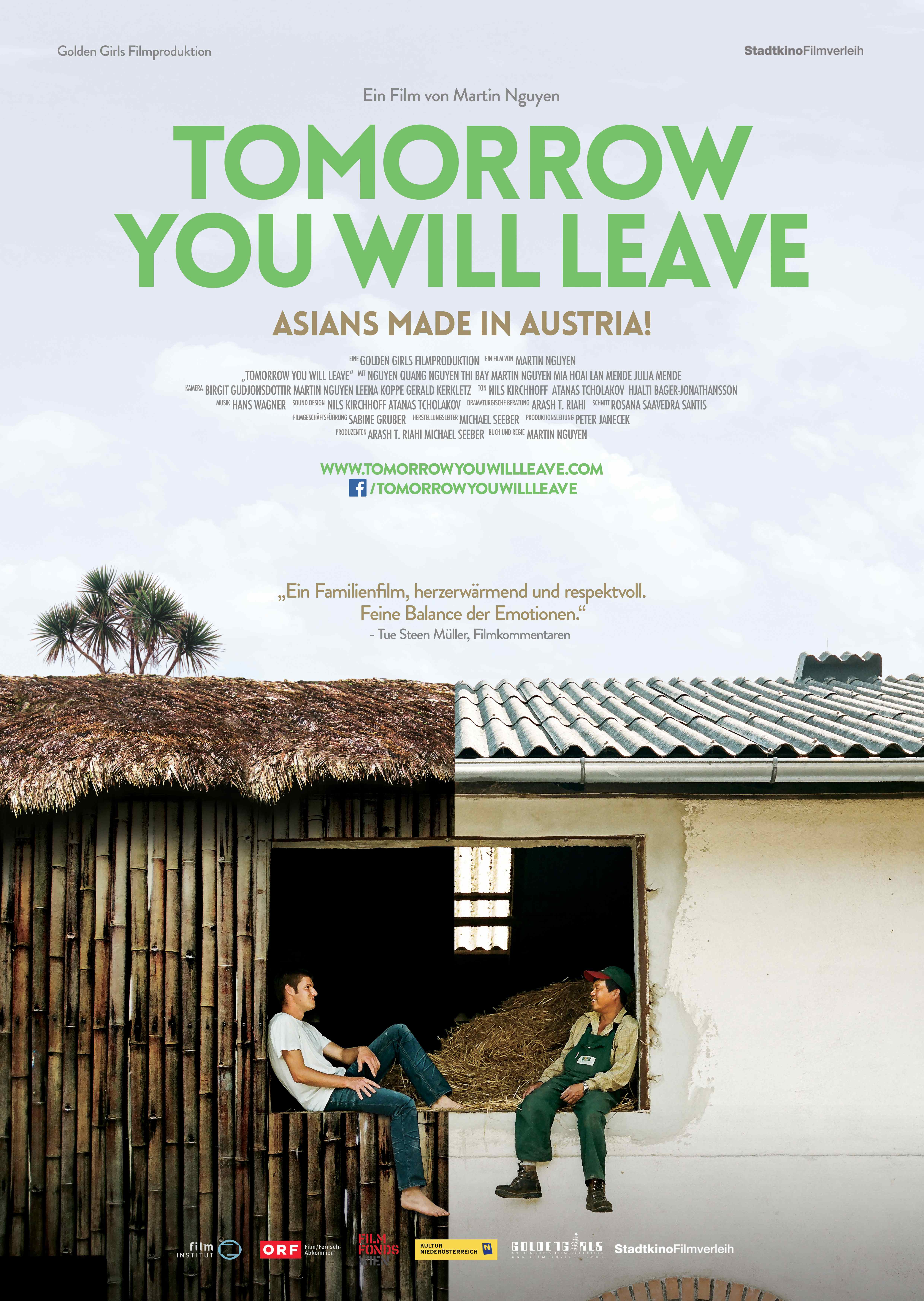
There are points in life, at least in the lives of some people, that are perfect film material. Moments full of suspense, where life is open to unexpected twists of fate. Leaving a home behind, to build a new life, is one such point. Especially if to reach that new life you had to travel thousands of miles, to cross the sea in a small open boat. To travel from Vietnam and to end up in Austria.
This is the story of the family of Martin Nguyen, an Austrian filmmaker of Vietnamese origin, a story he chronicles in autobiographical documentary Tomorrow You Will Leave.
The film follows Martin and his father’s journey to Malaysia to find a man called Ali who had been instrumental in the history of their family. A man who had helped them move from the refugee camp in Pulau Bidong, where Martin was born in 1980, to where they live today. In looking for Ali, and in delving back into their past, the film traces Martin’s parents’ journey from South Vietnam in 1979, via Malaysia to their life today as farmers in a tiny mountain village in Lower Austria.
& Of Other Things spoke to Martin about discovering his family history, the deception of memory and about being different.

Austrian filmmaker Martin Nguyen photographed in Vienna
Interview by Fabiola Buchele ● Edited by Rose Arnold ● Images by Anton Widauer
&: Did you already know the story that unfolds or did you discover your own family history while making the film?
Martin Nguyen: I knew the story line itself. Particularly the story of Ali, the man who helped my parents in the Malaysian refugee camp, I knew his story. And this was really the jumping off point for filming this documentary. Of course in the process of making the movie, more stories were uncovered and details added.
My parents’ life was so future orientated and fully focused on building a livelihood, that is to say to become materially secure, that really it has been over 30 years since my father looked back. Where did he take which paths, what coincidences, what lucky coincidences led him to be where he is today. And it was during the filming that we talked more about [the past] and I found out more.
&: In the case of Tomorrow You Will Leave, how is the result different from the concept?
Martin Nguyen: That is difficult to say, because parts of the film were clear. The Austrian aspect was straightforward and easier to plan, because I knew what my parents’ life is like, what they do, what interests them. And we had the trip to Malaysia as a jumping off point, but the end was open. We simply did not know whether will we find him [Ali] or will we not find him, we didn’t know where the trip would lead us to.
There were two possible ways of doing this. We could have researched it first and said, ok we will find this man and then we’ll go there and shoot, but I did not want that. And the other option was to say, we have a point of reference, a place and from here we let ourselves be carried away and see where we end up.
The first option would have been easier to finance, because you can tell people exactly what to expect and how long it will take. The option I chose took more persuasion.
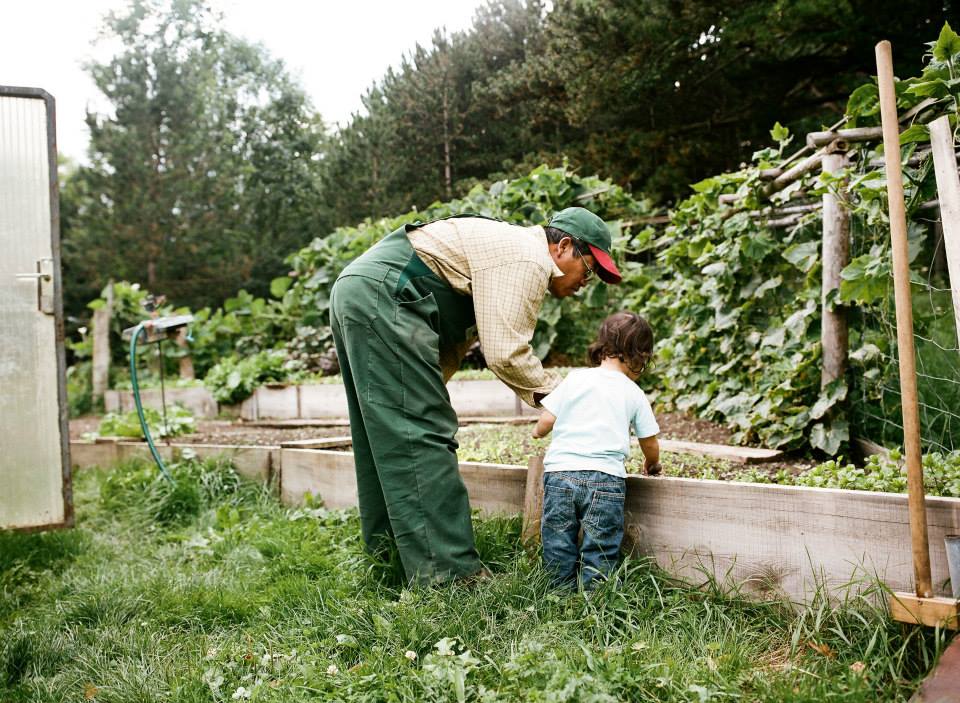
Martin Nguyen’s father Quang with his granddaughter (image courtesy of Martin Nguyen)
&: Did your father himself rediscover his own story and learn new details about it?
Remembering results in a sentimentalised version of memory.
Martin Nguyen: Of course, in the course of shooting the film he himself realised, that remembering results in a sentimentalised version of memory. You cobble together your memory on your own, but in the process of this journey or rediscovery you find out whether what you find fits with this memory. Is it really memory or the gradual shaping of reality?
&: Did your role within the family change, when you asked about its history not as a son, but as a filmmaker?
Martin Nguyen: It changed in that you have to change your viewpoint. As a son I fulfill a specific role in the family and I act accordingly. Only as a filmmaker you ask differently. You approach topics and questions more openly, more neutrally. Therefore my parents, especially my father, answered differently to when I ask as his son.
As a filmmaker this was an ideal story. My father once told me he himself wanted to find out what was behind the Ali story and what other old stories were left to be discovered.
So the idea for the story has been around for long, but it takes time until you actually do it – Either as a son or as a film maker, splitting those two is not possible anyway. But to realise that this story is interesting for a different audience too, not just for my own parents or for me.
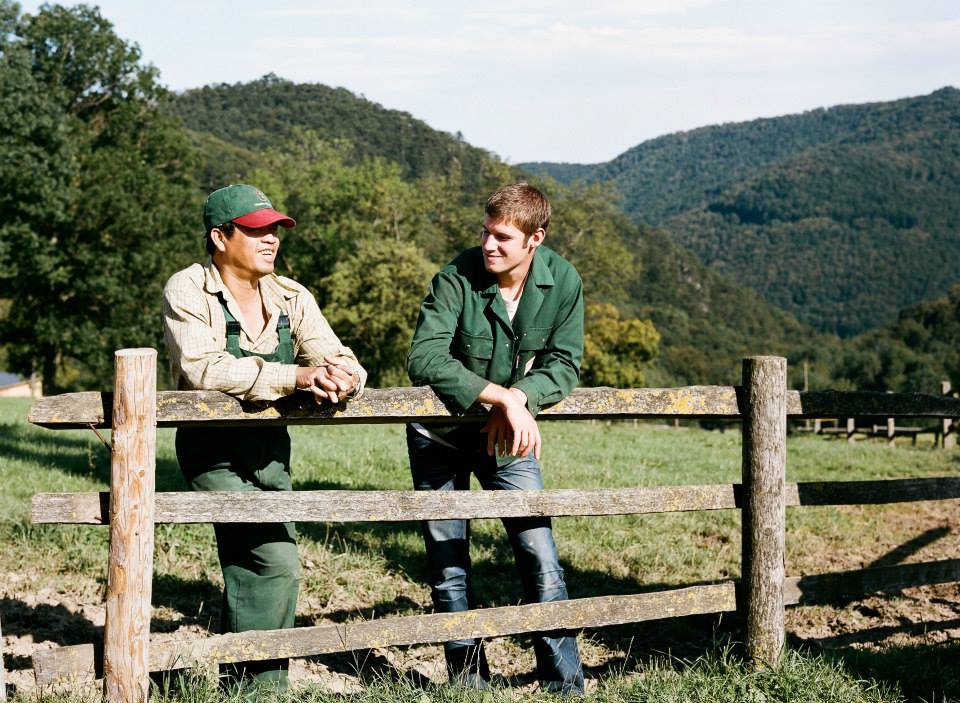
Quang with a work colleague on a farm in Lower Austria (image courtesy of Martin Nguyen)
&: What are the themes of the story?
Martin Nguyen: Being foreign, starting from scratch, but also to reflect on how you got to the point in your life you are standing at right now. How much of that is your own doing, how much is luck and how much coincidence?
Standing at a point in your life and appreciating what you have is really quite something.
As my father says in the film, you start to realise how lucky you are to be where you’re at. We don’t think about it often, because things just happened the way they happened. He fled when he was young and only found out afterwards that Thai pirates had been waiting on the sea or that he could have happened upon a storm. Or that he met Ali who helped him… To realise all that and appreciate it, that was of incredible value to my father. And for me too. Because I find standing at a point in your life and appreciating what you have is really quite something. That you can be happy and content about it.
&: Did your own perspective change regarding why you are where you are at? Fate, luck coincidence?
Martin Nguyen: Yes of course. I discovered stories that I previously knew nothing about. What life was like in the refugee camp. How you survived on a boat on open water and things like that. And what my parents sacrificed so that us children could go to school and afford things. That changes your perspective of course.
My father regards all this as luck, because he did not contribute to it. He was a simple young man without much of a plan. They just decided to get together and set sail on a small boat and to look back at that now… how he managed to build a life in Austria in a village he had never heard of, that to him is luck, even if it was difficult at the outset.

Austrian filmmaker Martin Nguyen photographed in Vienna
&: How does your experience of being different and foreign in Austria differ from your father’s?
Martin Nguyen: For my father it was very difficult in the beginning. He could not speak the language, he didn’t know the surrounding. It was a very small village with hardly any people, far away from anything he had ever known.
People didn’t know how to deal with us, so they just treated us like everyone else. It was too small to avoid us and you simply had to get to know one another.
For my family it was probably lucky that we ended up in such a small village, where we were the only foreign family. The people didn’t know how to deal with us, so they just treated us like everyone else. It was too small to avoid us and you simply had to get to know one another.
But for me there was no integration process, because I grew up there like everyone else. I did not have to be integrated. And that is the difference. My father had to learn a new perspective and I did not. For me the difficulty was more how to live in two cultures. In school you behaved a certain way and at home another way.
&: When did you first travel to Vietnam and how was your experience?
Martin Nguyen: 1995, I was 15 and full of false expectations. Everything had been idealised. It was the first time that you meet your family, your relatives. But really, they are strangers to me. And I felt more foreign there than in Austria. In Austria I look different, but I speak like most of the others and in Vietnam it was the other way around. I look the same, but as soon as I open my mouth everyone knows that I am not from there.
But it was important. For my children too, it is part of their identity. I want them to grow up in a way where they do not have to start digging into their history as adolescents or adults, but that it is simply a part of them from the start. I speak Vietnamese with them, which means they learn certain things about the culture and when they are older I want to take them to Vietnam, so they can see what the origin of part of their identity looks like.
●●
Tomorrow You Will Leave will be shown as part of the 6th European-Vietnamese Documentary Film Festival on 12 June at 18:30 at the National Documentary and Scientific Film Studio on 465 Hoàng Hoa Thám. The film is in German, Vietnamese and English with English and Vietnamese subtitles.