
The art of the story and the Hanoi Story Slam.
Words by Sadie Christie ● Edited by Rose Arnold ● Photos by Teresa Wealleans
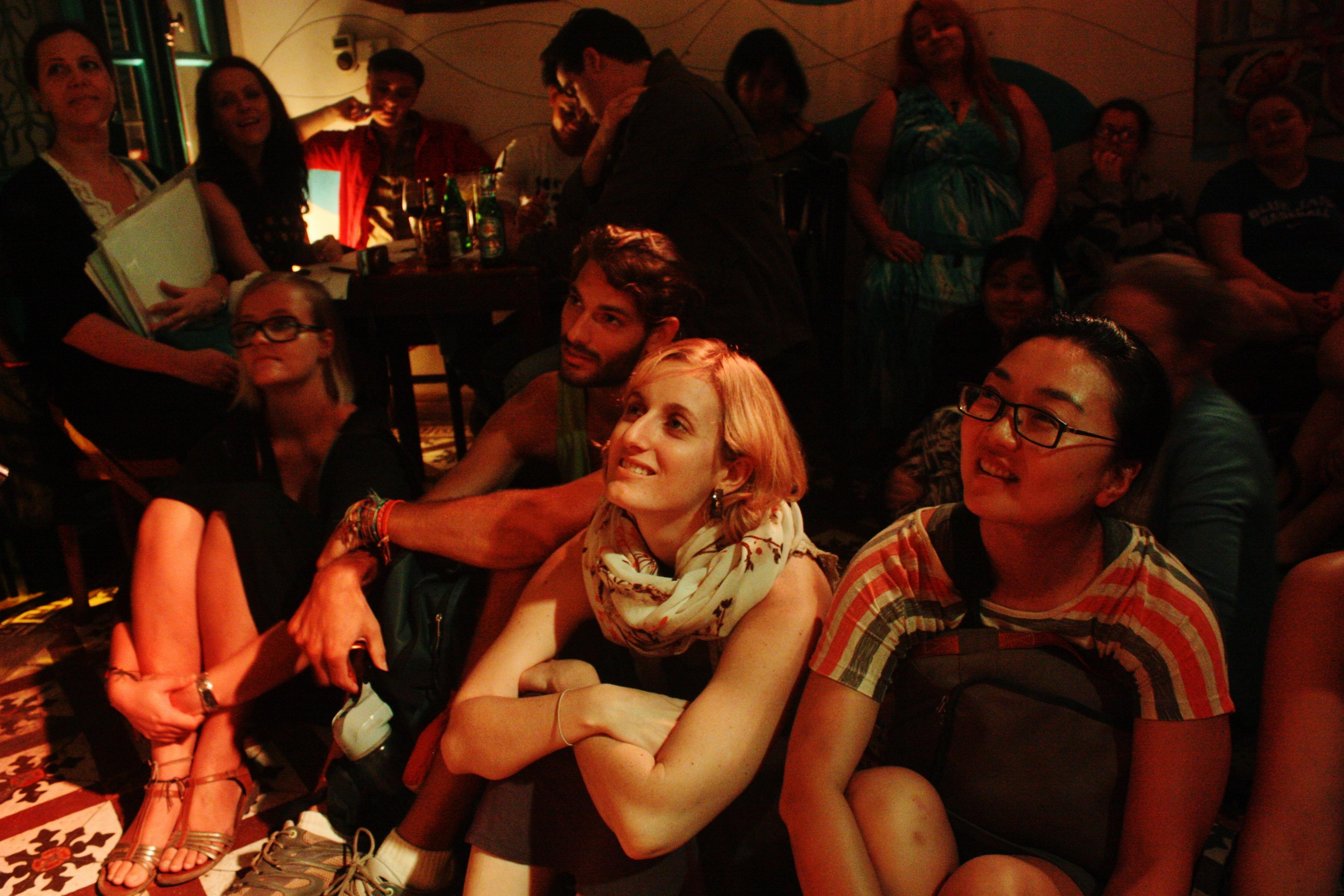
“When I say that I felt alone, what that means to me, is that I was adrift, and I was un-tethered, and I was profoundly afraid.” So begins Meghan Mills-Novoa, two-time winner of Hanoi Slam, to her audience. It’s a full room. There’s people leaning against the wall, sitting on plush chairs, nestled against one another on wooden floors, staring up at her.
“Storytelling is not just about sharing an experience but also processing that experience.”
For Meghan, storytelling began at a young age. As she recalls, “My father has always been a master storyteller and reinforced that storytelling is not just about sharing an experience but also processing that experience.”
Traditionally, stories such as folk tales, legends, and myths were created to teach others about morality and social values, but you won’t hear much of that at the Hanoi Slam, a monthly storytelling competition that has seen local and expat storytellers alike sharing their personal stories from around the world on stage in Hanoi since 2013. Storytelling in this format is more about personal reflection, self-expression and shared experience.
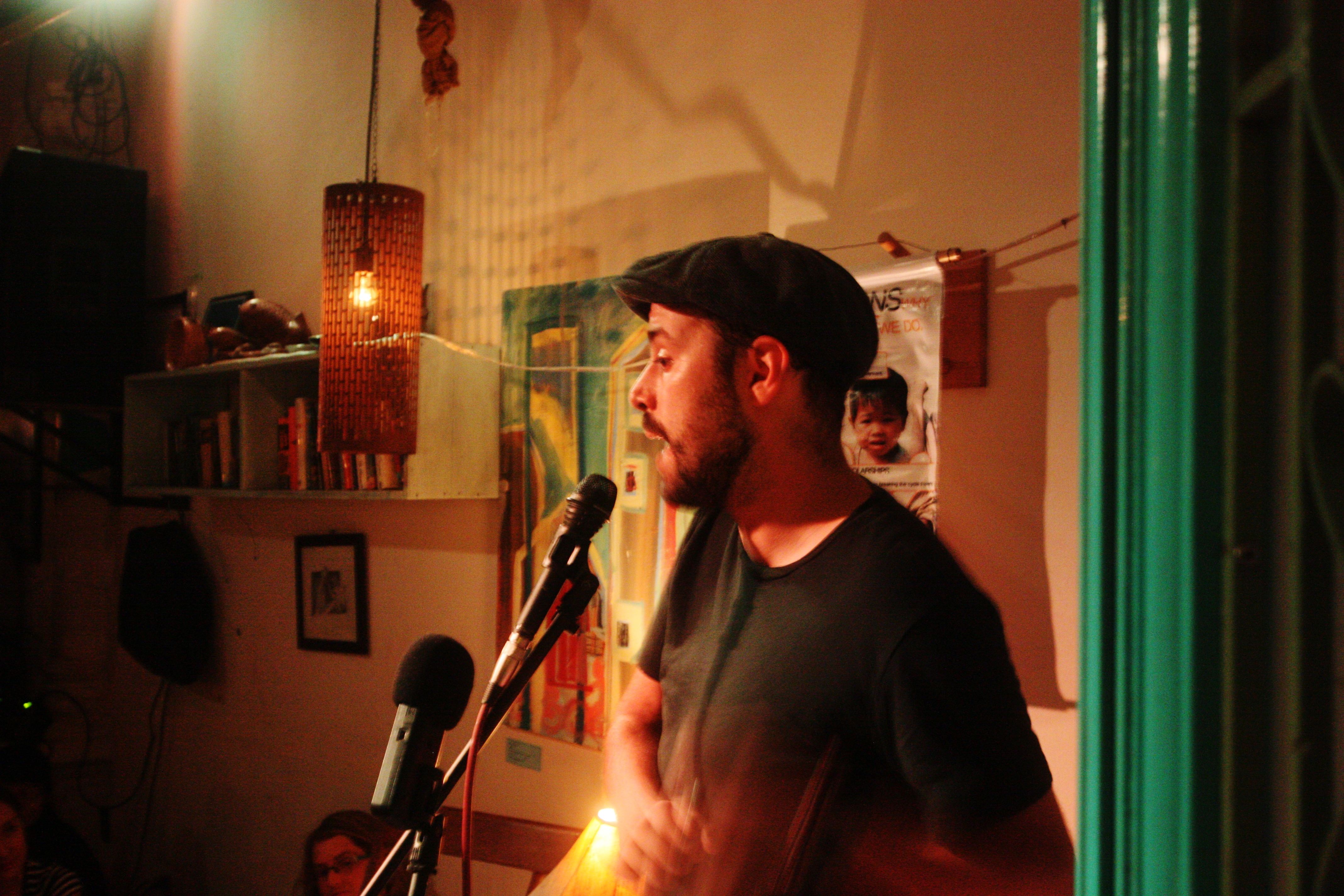
Joss Barrett and his wife, Anetta DeVet, began Hanoi Slam for their belief in, and love of stories. Joss believes, “We’re all made from stories and those stories help define us. By bringing our stories into a room and sharing them with friends, we’re building our own oral history.”
And in a way we are all storytellers. Our brains process information by building a cognitive map of experiences, ideas, and memories, based on causality. We are constantly creating narratives of our experiences, breaking them down into stories of cause and effect in order to better understand the world around us—how things work, how we make decisions, persuade others, process memory, and create our identities.
Even if standing up in front of others to tell your story isn’t for you there’s still something to be gained from listening to others. When we hear others’ stories, our brains reference our own cognitive map of experience, comparing and relating it to things we’ve experienced before, tuning in to someone else’s experience or idea and processing it as if it were our own. In other words, imagined experiences can be processed the same as real experiences, creating genuine emotional and behavioral responses, making them a useful tool in teaching.
“When an individual has a voice, she has power and ability to make an impact.”
Of course getting in front of people can be nerve-wracking, especially when the story being told is one of personal significance, but the Hanoi Slam is an experiment in building your voice and having confidence in what your story has to say. Minh Ha Pham, winner of Hanoi Slam’s “fear” night, and stand-up comedian says, “When I’m on stage, I have my time and the attention to convey a message, whether it’s about my perspectives on cultural differences or my attitude towards certain social behaviours. I believe when an individual has a voice, she has power and ability to make an impact.”
So what makes a good story? Two-time winner Nicole O’Block believes, “The best stories guide the listener to an emotional discovery, whether it’s clarifying some of the questions in your own mind, unearthing your own faults and fears or, really, finding connection in recognising the small moments that unite us all.”
●●
Hanoi Slam ̶ ‘Live Hanoi’ 7:00pm, Wednesday, October 21 , CAMA, 100k, on the door (Hanoi Slam supports NGO Humanitarian Services for the Children of Vietnam)


